Global Industry Challenge
Compete Globally. Build Real Quantum Solutions.
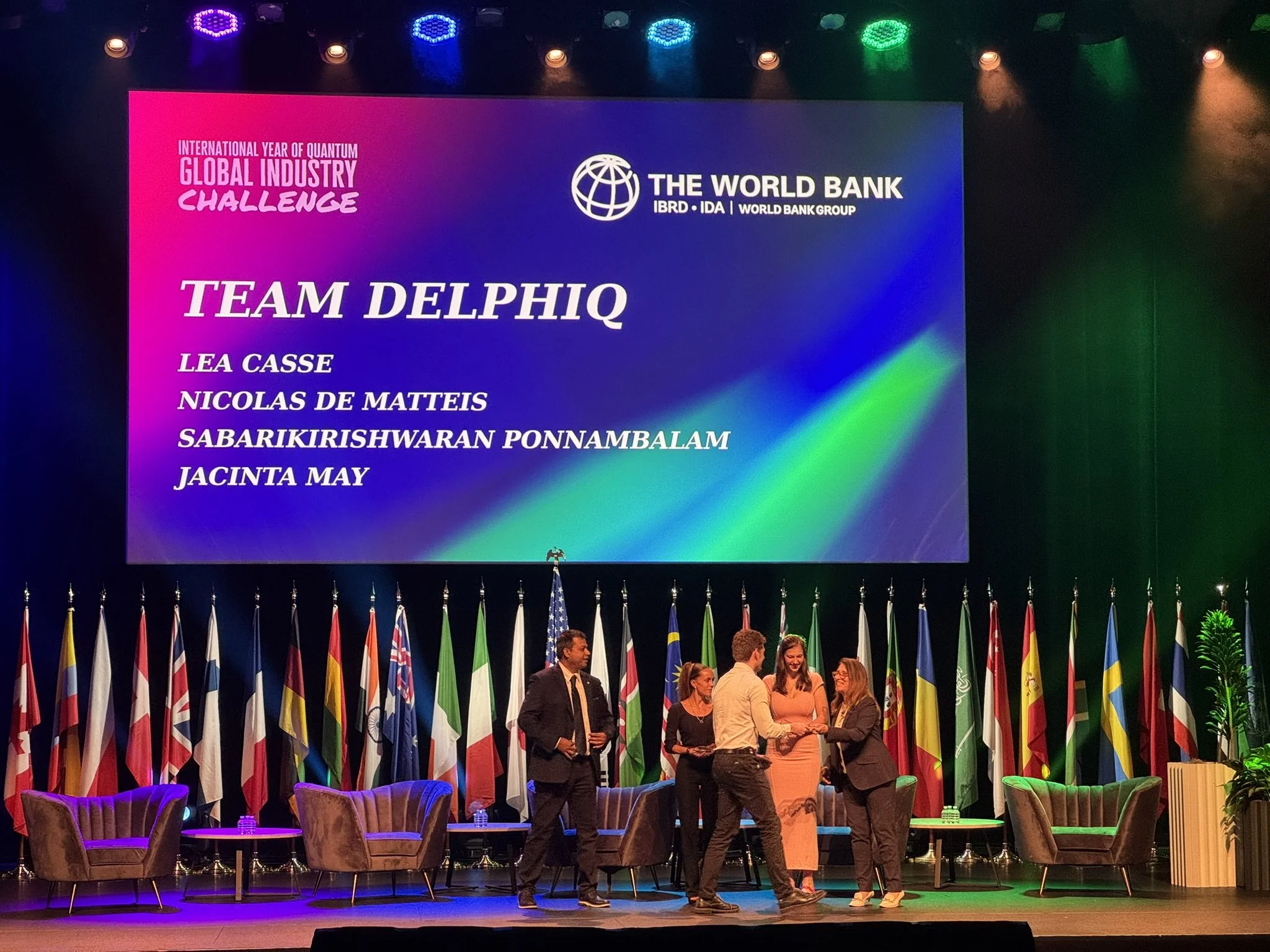
Quantum Australia is supporting Australian teams to take part in the Global Industry Challenge (GIC), a global program where researchers, developers, startups and industry collaborate to solve real-world industry problems using quantum computing.
The Global Industry Challenge brings together innovators from around the world to work on high-value industry use cases across sectors such as energy infrastructure, advanced materials and dynamic systems forecasting.
By participating, Australian teams can collaborate internationally, access leading quantum computing platforms, and showcase their solutions on the global stage.

About the Global Industry Challenge
The Global Industry Challenge (GIC) is a global innovation program that connects quantum researchers, developers, entrepreneurs and industry partners to tackle practical industry problems using quantum technologies and adjacent capabilities such as AI.
Hosted by Connected DMV, the Challenge is designed to accelerate the commercialisation of quantum technologies and demonstrate how quantum solutions can move from theory into real-world applications.
The Challenge returns with expanded industry tracks, deeper technical engagement and increased international collaboration.
Challenge Focus Areas
-
Explore how quantum computing can accelerate the discovery and simulation of next-generation materials for industries such as semiconductors and chemicals.
Challenge Use Case:
Mitsubishi Chemical & The National Institute of Advanced Industrial Science and Technology (AIST)Harnessing the Generative Quantum Eigensolver for Next-Generation Materials Design
Advanced materials design drives innovation across the chemical and semiconductor industries, yet conventional computational approaches face limitations in accuracy and scalability when exploring complex molecular and material systems.
This challenge centers on the Generative Quantum Eigensolver (GQE), an AI-driven quantum application that combines generative machine learning models with quantum eigensolvers to enable more accurate quantum simulations and efficient exploration of vast materials design spaces.
Participants will investigate approaches for applying GQE within a Quantum Materials Informatics platform to improve quantum simulation accuracy for material properties, efficiently generate molecular and structural candidates, and accelerate materials discovery beyond the capabilities of classical simulation methods, including the simulation of extreme ultraviolet semiconductor materials.
-
Apply quantum optimisation techniques to improve resilience, efficiency and planning for modern power grids and microgrid networks.
Challenge Use Case:
1. Quantum Computing Inc.Cost Optimization in Resilient Power Grids
Power grids around the world are evolving with increased demand, sustainability goals, and the need for resilience against disruptions.
Integrated models of distributed resources break the grid into networks of microgrids that combine storage and generators, operate in connected or disconnected modes, and serve critical infrastructure under real-world disruption scenarios.
Optimizing these systems requires modeling thermal generation with higher-fidelity cubic cost functions and evaluating performance across multiple simulated scenarios. Participants will use quantum computing methods, including entropy quantum computing for optimizing cubic cost functions, to improve cost efficiency and resilience in microgrid networks while benchmarking performance against classical approaches.
2. US Federal Agency (Confidential)Quantum-Enhanced Strategic Siting of Energy Storage and Microgrids
As electricity demand grows and the U.S. power system integrates data centers and large industrial loads, grid planners must strategically determine where to deploy energy storage systems and microgrids to maximize resilience, reliability, and economic efficiency over multi-year planning horizons.
These siting and sizing decisions must account for load variability, generation variability, transmission constraints, contingency requirements, and varying weather risks, requiring evaluation of thousands of potential infrastructure configurations across diverse operating conditions.
Participants will investigate quantum formulations of siting decisions, develop mappings to QUBO or variational optimization frameworks, and benchmark hybrid quantum approaches against established classical planning solvers.
The objective is to determine where quantum methods may improve combinatorial search efficiency, scenario exploration, solution robustness, or investment trade-off analysis for critical energy infrastructure.
-
Design quantum reservoir computing systems capable of forecasting complex time-series data, including financial markets and weather systems.
Challenge Use Case:
qBraid, MITRE, and Jones TradingQuantum Reservoir Computing for Time-Series Intelligence
Quantum Reservoir Computing (QRC) is a near-term quantum machine learning paradigm for temporal data processing that requires no gradient-based optimization of the quantum system and is suited to noisy intermediate-scale quantum hardware.
Participants will design and benchmark simulation-friendly QRC systems and apply them to real-world industry problems where chaotic dynamics and nonlinear temporal dependencies are central, including financial volatility prediction and climate and weather time-series forecasting.
Teams will demonstrate performance across different qubit counts and realistic noise models, benchmark against classical baselines, and implement a common benchmark to validate that the quantum reservoir exhibits sufficient expressivity for forecasting complex, regime-shifting systems.
The 2026 Global Industry Challenge focuses on sectors where quantum technologies can deliver meaningful industry impact.
Quantum Australia’s Role
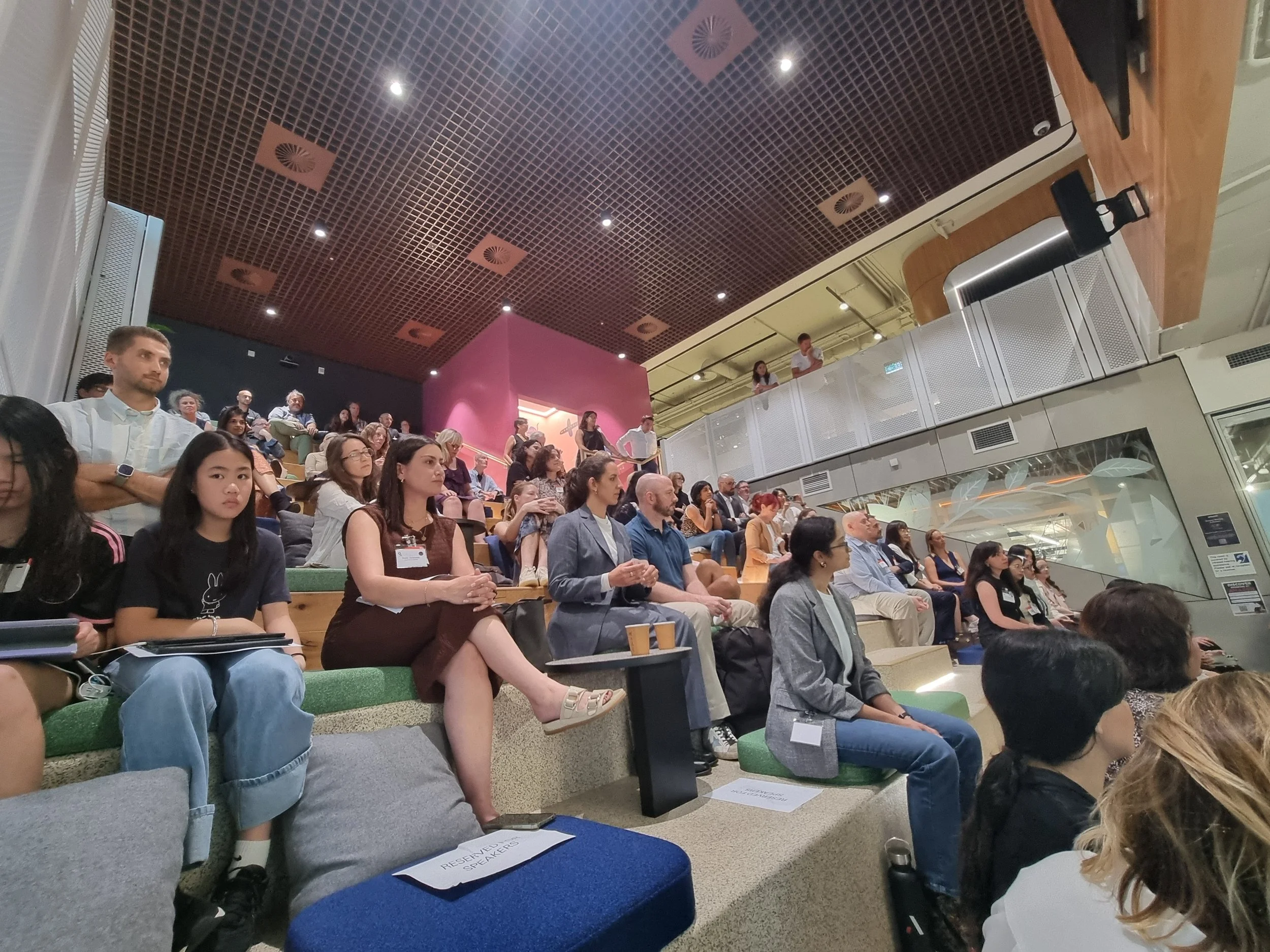
Quantum Australia is supporting Australian participation in the Global Industry Challenge as part of our commitment to strengthening Australia’s role in the global quantum ecosystem.
Through this initiative, we aim to:
Help Australian researchers and startups engage with international industry challenges
Connect teams with global collaborators and talent
Support Australian innovators to demonstrate real-world quantum solutions
Strengthen Australia's presence in the global quantum innovation ecosystem
Australian teams will be able to collaborate with participants worldwide while representing Australia in one of the largest global quantum innovation programs.
Who Should Apply
The Challenge is open to teams including:
Quantum researchers
Developers and algorithm specialists
Startups and entrepreneurs
Industry practitioners
Interdisciplinary teams combining quantum with AI, optimisation or modelling expertise
Key Dates
Applications Open
March 2026
Phase 1 – Team Formation & Submission March – April 2026
Phase 2 – Concept Development
April – May 2026
Phase 3 – Applied Execution
May – July 2026
Awards Ceremony
Quantum World Congress, September 2026
Platform Access
Challenge finalists receive access to a range of quantum hardware and simulation environments, including:
IBM quantum systems
D-Wave quantum annealers
IonQ trapped-ion systems
QuEra neutral-atom platforms
NVIDIA GPU-accelerated simulation environments
Why Participate
Participating in the Global Industry Challenge gives Australian teams the opportunity to:
Access cutting-edge quantum infrastructure
Run experiments on leading quantum hardware and simulation platforms.

Collaborate globally
Join teams with researchers, developers and startups from around the world.

Showcase your work internationally
Present solutions at Quantum World Congress and gain global exposure.

Accelerate commercial impact
Develop solutions with real industry relevance and potential pathways to deployment.
Work on real industry problems
Collaborate with global organisations defining real-world quantum challenges.
Need more info?