Startup Spotlight: FeBI Technologies
The diamond sensor that could end years of iron misdiagnosis
Melbourne quantum start-up FeBI Technologies is targeting a blood test that hasn’t changed in decades - developing new technology to identify the one in three women currently misdiagnosed.
FeBI Technologies
For seven years, Nicole Jenkins knew something was wrong with her body. Her GP’s response was the standard one: try to rest more. The tests that might have caught the real cause were quietly dropped from the workup. It wasn’t depression. It was iron deficiency, hidden by a chronic inflammatory condition that had been skewing her results all along. A single iron infusion, once she was finally diagnosed, changed how she felt almost immediately.
Jenkins isn’t alone. Every time she tells that story publicly, she says, someone comes up afterwards with a version of their own — five years, nine years, a partner still searching for an answer. It’s the reason she went, in her words, “full on” into FeBI Technologies, the company she co-founded to fix the test that failed her.
Two problems that needed each other
FeBI’s origins sit in two separate research problems that happened to fit together. At the University of Melbourne’s School of Physics, Associate Professor David Simpson and Dr Liam Hall were building diamond-based quantum sensors - instruments sensitive enough to detect vanishingly small magnetic signals. At the Florey Institute of Neuroscience and Mental Health, Associate Professor Gawain McColl, with whom Jenkins was then working, was studying the biology of ageing and neurodegeneration. He had spent years, in collaboration with the Australian Synchrotron, developing better ways to measure iron in biological systems - iron being central to conditions from Parkinson’s to Alzheimer’s.
One group was building an instrument without a clinical problem to point it at. The other had a problem no existing instrument could measure properly. This led to a Medical Device Partnering Program grant in 2020 — the formal starting point of what became FeBI. Jenkins, finally diagnosed herself at the time, helped to turn an academic collaboration into a company with a patient in mind.
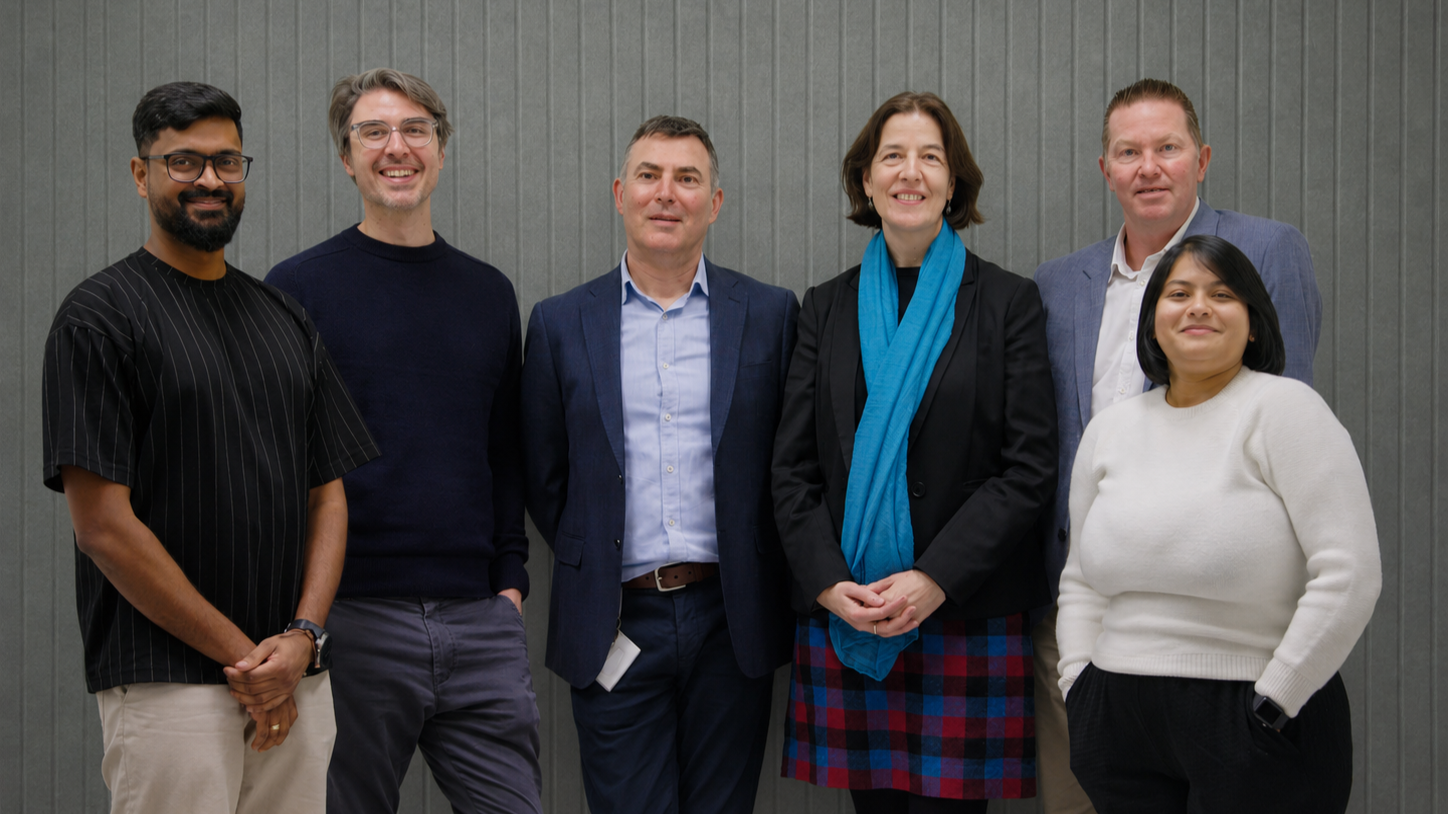
FeBI Technologies — the name plays on both the chemical symbol for iron and ‘ferritin- bound iron’ — is co-founded by Jenkins (CEO), Simpson (CTO), McColl (CSO) and Hall, who now leads quantum biotechnology work at CSIRO, with Dr Andrew Watt as chief operating officer. One detail worth flagging for readers following this series: Simpson is the same David Simpson who serves as chief scientific officer at fellow Melbourne quantum start-up Phasor Quantum — confirmed on the record for this piece.
What the blood test misses
The standard blood test measures ferritin, the body’s main iron storage container — each molecule can hold up to roughly 3,000 iron atoms, none at all, or somewhere in between. In a healthy person, ferritin levels track iron levels closely enough to be a useful proxy.
The problem is that ferritin is also an acute-phase reactant: its levels rise in response to inflammation, independent of how much iron is actually inside. A cold, an injury, chronic kidney disease, diabetes — even, in Jenkins’s case, endometriosis — can push ferritin readings up regardless of true iron status, masking deficiency in some patients and making it impossible to distinguish genuine overload from an inflammatory blip in others. Existing tests, Jenkins says, simply “can’t distinguish between those.”
The human cost, on FeBI’s estimate, is that roughly one in three women are initially misdiagnosed with something else — most often depression, a plausible mix-up given many shared symptoms including persistent fatigue, brain fog, and low motivation. Once a patient is labelled depressed, Watt says, monitoring tends to shift to how they respond to antidepressants rather than back to their iron status, extending what could be a straightforward fix into years of the wrong treatment.
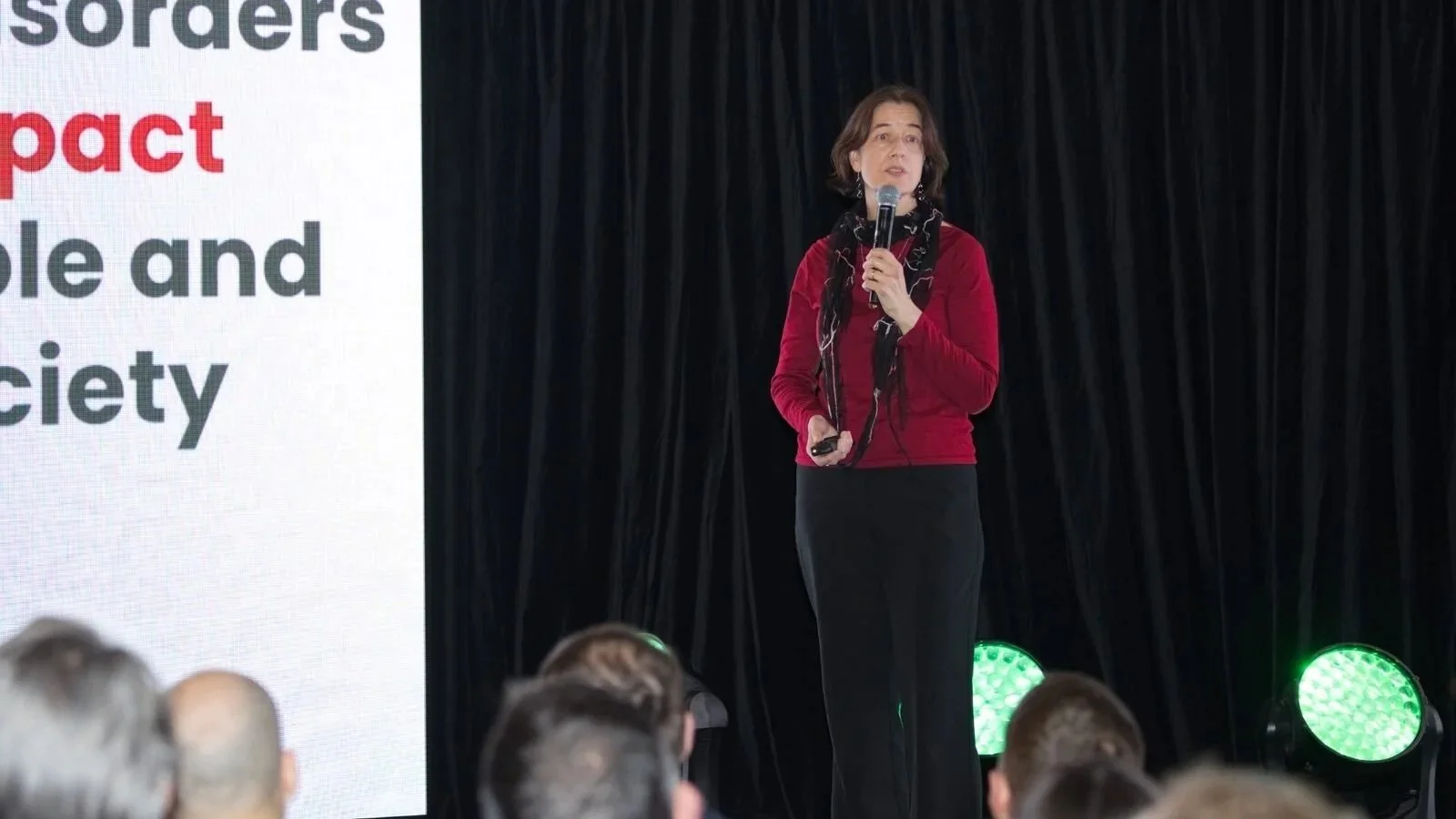
Dr Nicole Jenkins, Co-Founder & CEO, FeBI Technologies
A quantum MRI, at the nanoscale
FeBI’s sensor works, in Jenkins’s description, “a bit like a nanoscale MRI”, using the same underlying principle as a hospital MRI machine, which detects iron by reading the magnetic disturbance it causes, but shrunk down and enormously sharpened. According to FeBI, the technology is nine orders of magnitude more sensitive than a conventional MRI scanner.
The sensing element is a nitrogen-vacancy centre: a defect in a diamond’s carbon lattice where a nitrogen atom sits next to a missing carbon atom. That defect carries a quantum spin state sensitive to nearby magnetic fields, readable optically through changes in how the diamond fluoresces. Because iron is magnetic, the more iron atoms packed into a ferritin molecule, the more measurably it shifts that spin state. In principle, that lets FeBI’s sensor read not just whether ferritin is present, but how full it is, the detail today’s blood test can’t see.
From lab bench to blood draw
FeBI’s technology sits at around technology readiness level 5 — a lab prototype, portable enough to move between the University of Melbourne and the Florey Institute, but not yet field-ready. A Queensland prototype is due within the next year or so under the “Strike while the iron is hot” Quantum 2032 Challenge project, which carries an added angle: monitoring iron status in elite athletes ahead of the Brisbane 2032 Olympics. From there, the plan is clinical validation across the full range from deficiency to overload, with regulatory approval targeted a couple of years out.
The company envisages two eventual formats: one that slots into existing automated pathology-lab workflows as an addition to a standard blood panel, and a separate point-of- care device — closer to a fingerstick haemoglobin test — for settings like rapid screening and remote clinics. That second format underpins early work with Aboriginal health services in the Northern Territory, where a standard blood draw can take up to two weeks to return a result; that program is at an early stage and is a story in itself.
FeBI has received backing from a $494,000 Feasibility grant through the Critical Technologies Challenge Program, and was named a case study in the National Quantum Strategy. FeBI Technologies was recently selected for Quantum Australia’s inaugural NextQ cohort and added Merck’s Rebecca Lee to its advisory board late last year. The company is currently raising a seed round to fund the next stage.
Related articles