A Quantum Processor Small Enough to Fit Inside Your Desktop Computer - and It Doesn’t Need a Fridge
Sydney-based Quantum Brilliance is putting room-temperature diamond quantum processors in HPC centres around the world and showing what hybrid quantum–classical computing could really look like.
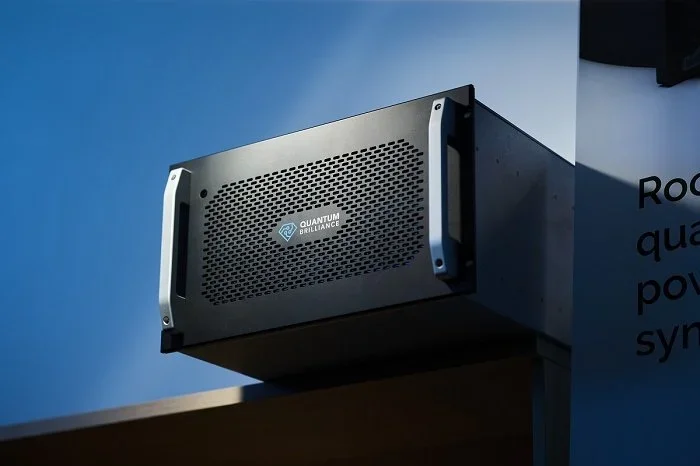
Image credit: Quantum Brilliance
Company: Quantum Brilliance (Sydney; with operations in Canberra, Melbourne, Stuttgart, Freiburg and Tokyo)
Quantum technology: Room-temperature nitrogen-vacancy diamond quantum processors
Strategic partner: Oak Ridge National Laboratory (US Department of Energy)
Research partner: Australian National University; Fraunhofer IAF; Pawsey Supercomputing Research Centre; imec
Application: Hybrid quantum–classical high-performance computing; portable and edge-deployable quantum accelerators
End user / industry application: High-performance computing, scientific research and edge deployment - room-temperature diamond quantum processors, in partnership with Oak Ridge National Laboratory and the Pawsey Supercomputing Research Centre.
The defining image of a modern quantum computer is a chandelier of gold-plated wires hanging inside a refrigerator the size of a small car, cooled to a fraction of a degree above absolute zero. It’s an extraordinary feat of engineering but a terrible fit for a data centre rack, a satellite, a vehicle, or any of the hundreds of real-world environments where quantum acceleration could be most useful.
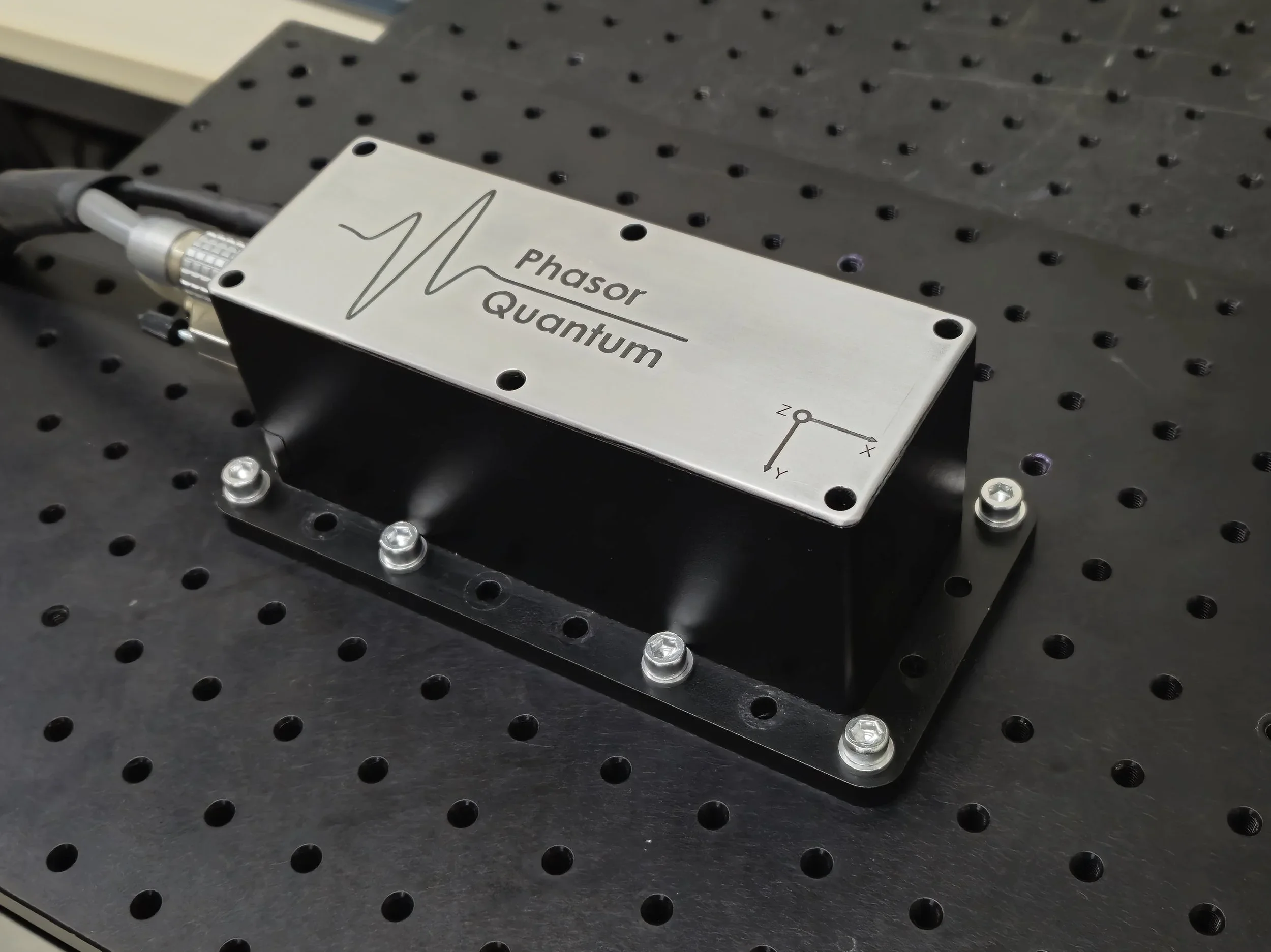
Quantum Brilliance, founded in Canberra in 2019 from research at the Australian National University, has taken a different path. Its quantum devices exploit the nitrogen-vacancy centres in synthetic diamond - atomic-scale defects where a nitrogen atom sits next to a vacant lattice site in the crystal, hosting nuclear spins that act as qubits for both sensing and computing.
Because diamond is extraordinarily hard and can be manufactured to extreme purity, those qubits remain stable at room temperature and atmospheric pressure with no cryogenics, no lasers cooling clouds of atoms, and no vacuum chambers required. The result is quantum sensors and computers that can be delivered in a chip-scale package and installed alongside CPUs and GPUs in a standard rack.
That form factor has now landed Quantum Brilliance one of the most strategic deployments in quantum computing.
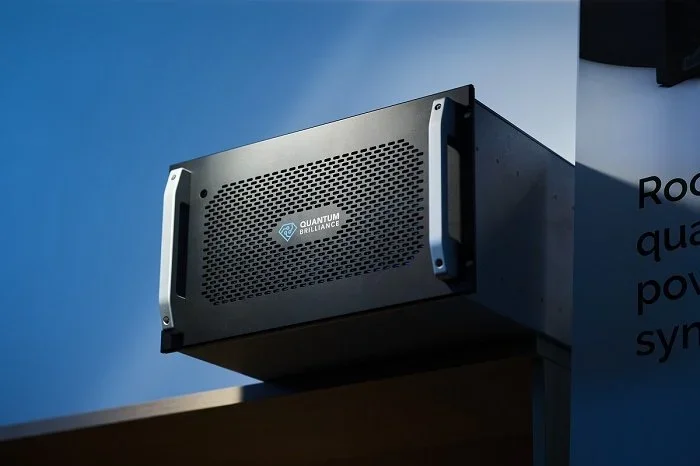
In 2025, the US Department of Energy’s Oak Ridge National Laboratory installed a cluster of three Quantum Brilliance Quantum Development Kits at its Oak Ridge Leadership Computing Facility, home of the exascale Frontier supercomputer.
Named ‘Quoll’ after the Australian marsupial, the system is ORNL’s first on-site, commercial quantum computer cluster, and is being used to develop the practical mechanics of hybrid quantum–classical computing: how do you co-schedule quantum and classical workloads, orchestrate data flows between them, and tune end-to-end performance when both kinds of processor sit in the same room?
It is Quantum Brilliance’s first US deployment, following earlier installations at Australia’s Pawsey Supercomputing Research Centre and Germany’s Fraunhofer IAF. The company is also part of an €18 million chip development project and a €35 million portable quantum hardware initiative in Germany, designing systems with 25 to 100 qubits in compact form factors.
Working with European nanoelectronics institute imec, it is exploring how to integrate diamond into standard semiconductor fabrication - a step that could eventually see quantum processors embedded directly on CPU or GPU boards.
If that vision plays out, the long-term picture is striking: not a handful of cryogenic quantum mainframes serving the world from a few specialised facilities, but hundreds of thousands - potentially millions - of small, room-temperature quantum accelerators distributed wherever the workload lives, from data centres and research labs to satellites and edge devices.
“Bringing the world’s first cluster of room-temperature QPUs into ORNL’s leading HPC infrastructure is an important technical step in demonstrating parallel quantum computing. It moves us closer to massively parallelized quantum devices, which we believe will be the preferred architecture for HPC centres.”
Related Use Cases