Shining Quantum Light on the Diseases Hiding in Plain Sight
Perth medtech company Avicena Systems is pairing light-emitting quantum nanomaterials with single-photon detection to strip background noise out of rapid diagnostic tests. This promises sharper, faster disease screening for biosecurity agencies, hospitals and the livestock trade.
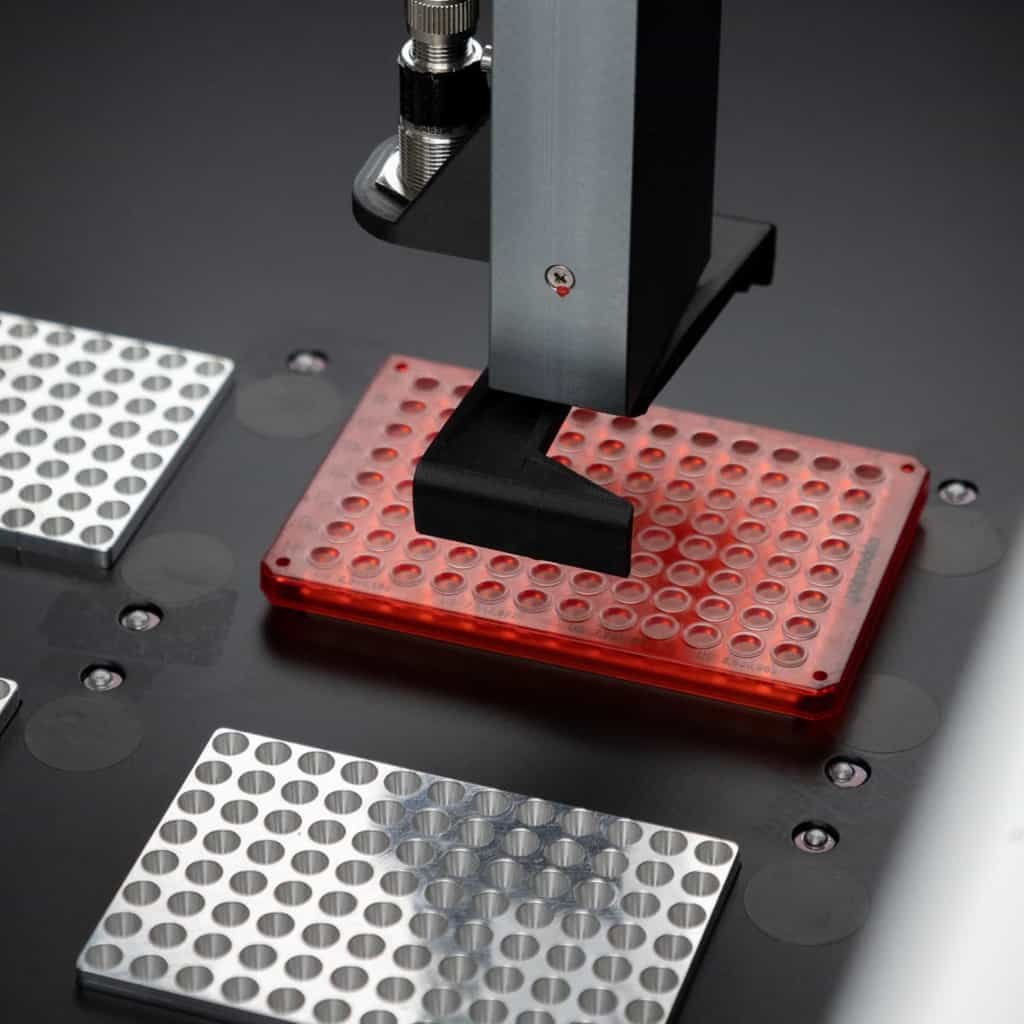
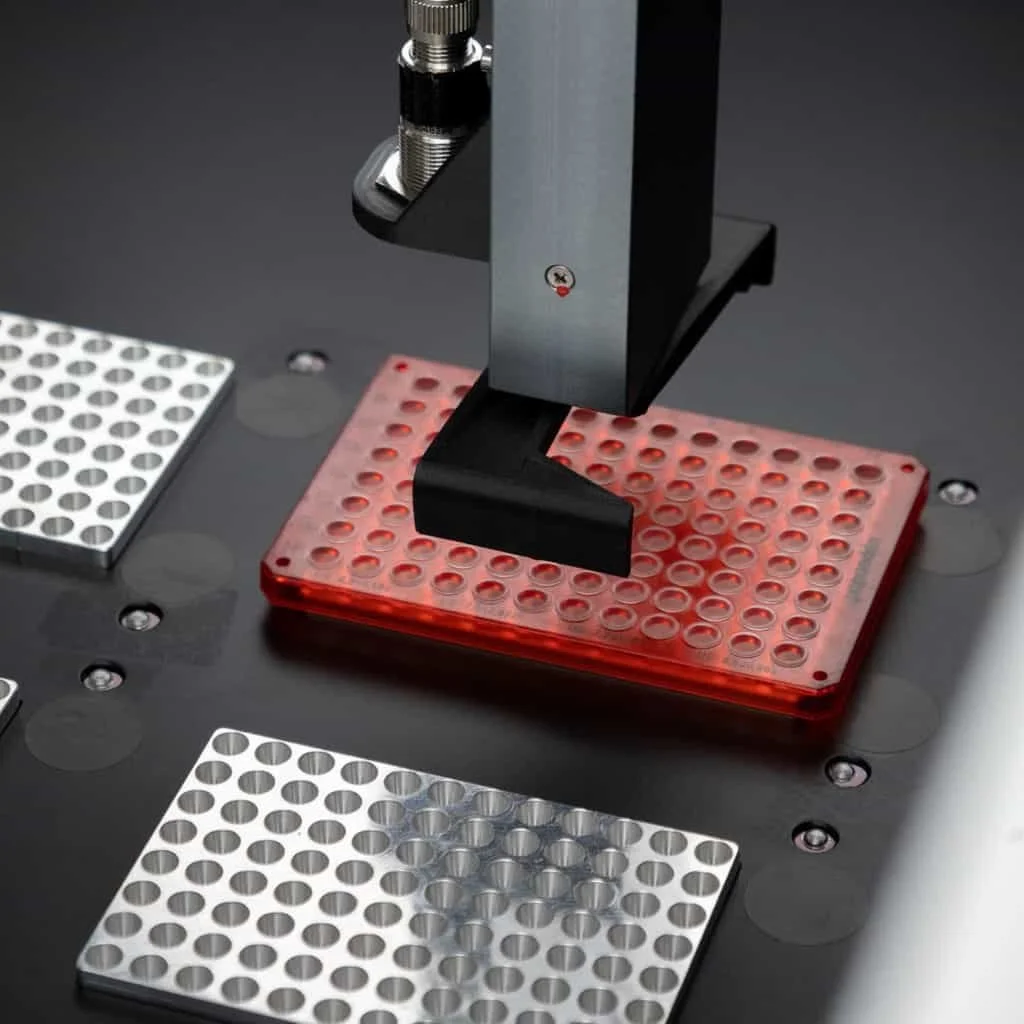
Image: Sentinel ULTRA Microplate. Credit: Avicena Systems
Company: Avicena Systems, Perth, WA
Partner: University of Western Australia
Funding: $498,922 – Critical Technologies Challenge Program, Round 2 Stage 1 feasibility grant
Technology: Upconverting nanoparticles and quantum dots, resonance energy transfer, single-photon counting
Platform: Avicena Sentinel – up to 100,000 tests per day, results in under 30 minutes
Focus: Ultrasensitive, multiplexed diagnostics for human health, animal health and biosecurity screening
End user / industry application: Biosecurity agencies, human and animal health diagnostics, livestock trade and outbreak response
Rapid diagnostic tests have become the frontline defence against everything from pandemic viruses to livestock disease outbreaks. Techniques such as Loop-mediated Isothermal Amplification, or LAMP, offer a rapid molecular testing method that does not require the thermal cycling used in PCR, making it well suited to point-of-care and field testing. But there’s a catch: when these tests try to screen for multiple pathogens at once, or catch an infection in its earliest, lowest-concentration stages, the fluorescent signals they rely on can get lost in background noise.
The result is reduced sensitivity – and a risk that early-stage infections slip through undetected.
Perth-based medtech company Avicena Systems believes quantum materials can fix that problem. Working with the University of Western Australia, and backed by a $498,922 grant through the Federal Government’s Critical Technologies Challenge Program, Avicena is testing new combinations of quantum dots and upconverting nanoparticles to further extend the signal-to-noise ratio to achieve ultrasensitive pathogen detection.
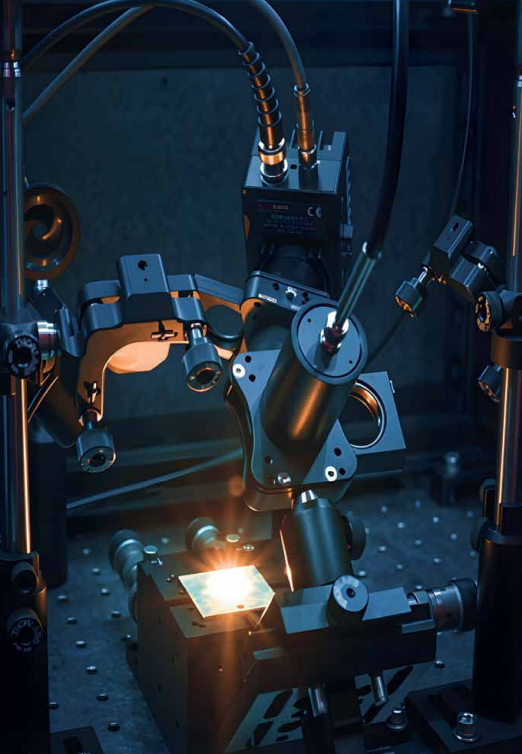
The approach pairs two types of light-emitting nanomaterials: upconverting nanoparticles, which absorb invisible infrared light and re-emit it at a higher, visible energy – a trick that sidesteps the background fluorescence that plagues conventional tests – and quantum dots, tiny semiconductor particles prized for their sharp, tuneable light emission.
By measuring how energy transfers between two materials, in frequency and over time (TR-FRET), the system can filter out background noise with far greater precision than standard fluorescence methods.
Crucially, while TR-FRET is already used in laboratory assays, Avicena’s demonstrator is the first to implement quantum-dot-compatible TR-FRET in a portable molecular diagnostics instrument built for deployment in the field. Rather than simply measuring how much light comes back, the system tracks tiny nanosecond-scale shifts in the phase of the fluorescent signal, a timing fingerprint that reveals whether pathogens are present in the sample. Because unwanted background fluorescence carries a different timing signature, reading these phase shifts lets Avicena isolate the true disease signal, setting its system apart from conventional tests.
This linking of nanomaterials to pathogen-specific biomarkers allows Avicena to boost the signal further, in order to achieve best-in-class sensitivity without sacrificing speed or scale.
The project will validate the technology on Avicena’s existing Sentinel platform, a fully automated, ISO 13485-certified diagnostic system already capable of processing up to 100,000 tests a day with results in under 30 minutes.
Sentinel is being used globally across human health, animal health and biosecurity settings – from hospital pathology labs to live animal export screening and environmental and wastewater testing to enable more agile outbreak responses. For example, Avicena is currently working with its international partners to screen for current H5N1 avian influenza and Ebola outbreaks.
If successful, the quantum-enhanced approach could let Sentinel detect even more pathogens from a single sample, at lower concentrations, without slowing down. For biosecurity agencies guarding against incursions like avian influenza or foot-and-mouth disease, and for health systems racing to contain the next outbreak, quantum-enhanced sensitivity could be the difference between catching a threat early and responding after it has already spread.
The project is one of four feasibility grants awarded under the Critical Technologies Challenge Program’s biosecurity challenge, part of a $35.9 million national initiative under Australia’s National Quantum Strategy to help move quantum technologies from the lab into real-world impact.
“Sensitivity is everything in outbreak response – the earlier you can detect a pathogen, the more options you have to contain it. Our Sentinel platform already offers unprecedented scale and speed of early pathogen detection. The addition of Quantum-enabled signal enhancement provides us with a new tool to deliver next level biosecurity for Australia.”
Related Use Cases