A Quantum Compass for the Deep Ocean, Where GPS Cannot Reach
Melbourne-based Phasor Quantum is fitting a diamond-based quantum magnetometer to one of Australia’s most advanced underwater research vehicles, providing navigation in environments where satellite signals cannot reach.
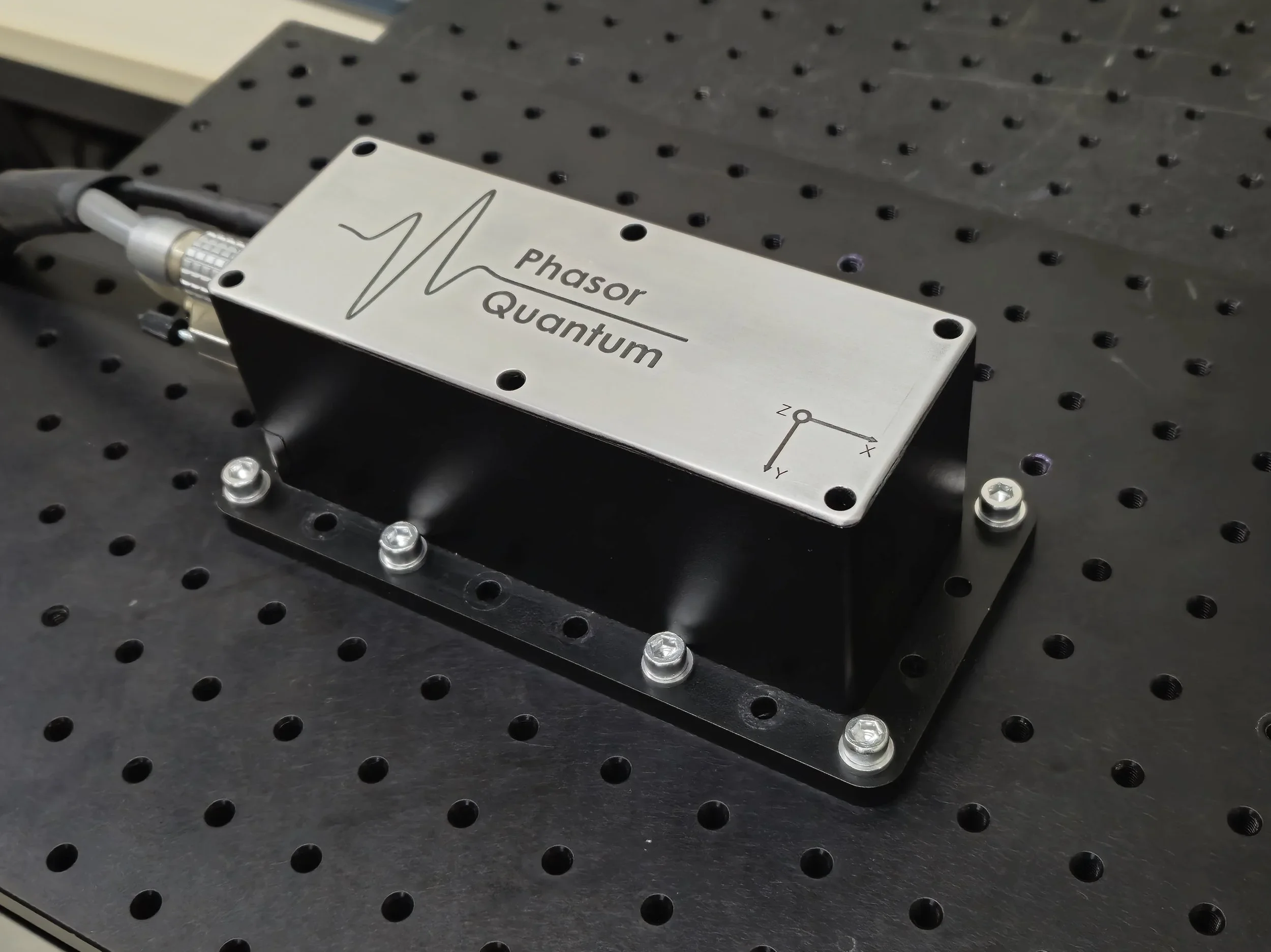
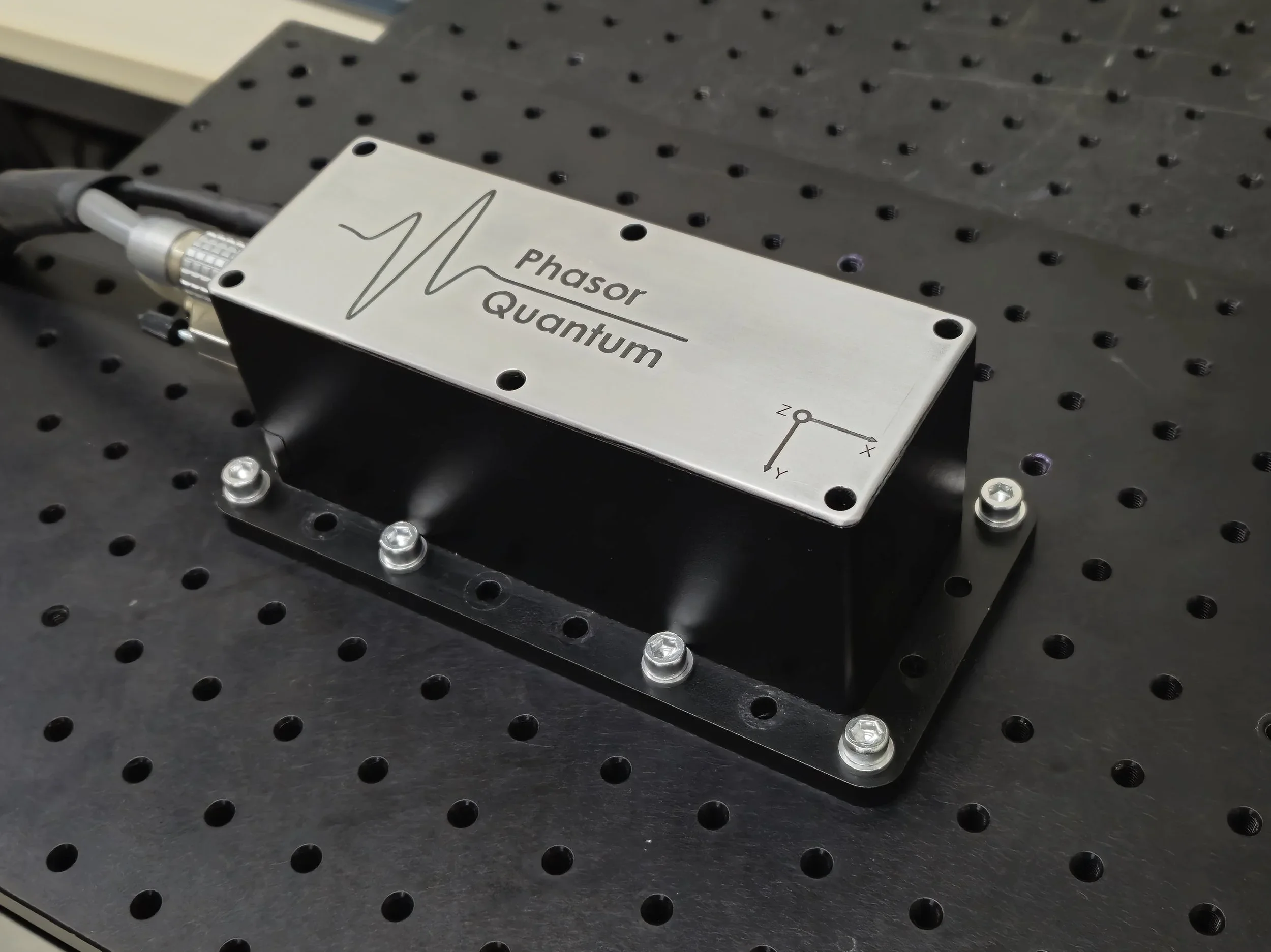
Image credit: Phasor Quantum
Company: Phasor Quantum (Melbourne, VIC)
Quantum technology: Quantum magnetometry - nitrogen-vacancy diamond magnetic field sensors
Industry partners: Australian Maritime College (University of Tasmania); Quantum Brilliance
Research partners: University of Melbourne; RMIT University; Defence Science Institute
Application: Magnetic navigation for autonomous underwater vehicles in GNSS-denied environments; defence, maritime and infrastructure sensing
End user / industry application: Defence, maritime and critical infrastructure - quantum magnetometry for navigation in GNSS denied environments, in partnership with the Australian Maritime College, the University of Melbourne, RMIT and Quantum Brilliance.
On the surface, GPS makes navigation feel like a solved problem. Underneath the surface, it stops working entirely. Satellite radio signals do not penetrate water, and once an autonomous underwater vehicle dives, it must rely on inertial navigation systems that lose position (drift) over time, acoustic beacons that need to be pre-positioned, or dead reckoning that compounds error with every metre travelled.
For defence, maritime science and critical infrastructure inspection alike, that limitation shapes what missions are even possible.
Phasor Quantum is developing a solution to that problem.
Working with the University of Melbourne and RMIT University, the company has developed a quantum magnetometer based on nitrogen-vacancy centres in diamond. By introducing nitrogen-vacancy (NV) centres into the diamond lattice where a nitrogen atom sits adjacent to a vacant lattice site, the diamond becomes an exquisitely sensitive detector of tiny variations in magnetic fields.
The Earth itself provides the map: every patch of the planet has a distinctive magnetic signature, and a sufficiently sensitive sensor can effectively read its position from that signature alone.
Phasor is now integrating its prototype quantum diamond magnetometer onto the Australian Maritime College’s flagship autonomous underwater vehicle, ‘nupiri muka’ a 5,000-metre-rated, 8-metre-long polar-capable self-powered, free-swimming robot operated out of the University of Tasmania.
Supported through Defence-aligned innovation programs, the trials will put magnetic navigation to the test in deep underwater environments where GPS cannot penetrate and precise positioning remains one of the hardest problems in maritime operations. Success will open up new possibilities for everything from undersea infrastructure inspection and seabed mapping to subsea defence operations.
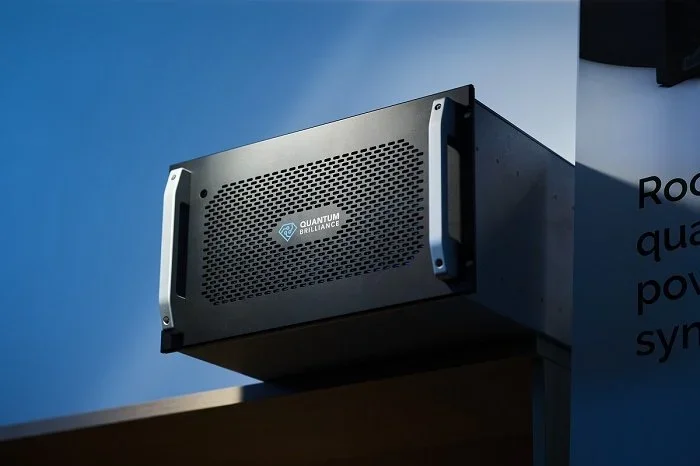
Phasor Quantum’s magnetometer is a strong example of Australian collaboration at work to develop sovereign capability with applications across a range of sectors. The company collaborates with Quantum Brilliance and benefits from diamond materials expertise and capability now being expanded through a national quantum-grade diamond fabrication facility at the University of Melbourne.
The underlying sensor platform has the potential to reach far beyond underwater navigation. Nitrogen vacancy diamond magnetometers are being explored for aerospace and space-domain awareness, precision mineral and resources surveying, critical infrastructure inspection, and biomedical sensing where they can detect the faint magnetic fields produced by the human heart and brain. Each of these applications demands the same core capability that Phasor is proving at sea: a sensor sensitive enough to measure what was previously unmeasurable, in environments that were previously unreachable.
“Quantum sensors shine when they make the previously impossible possible. Underwater magnetic navigation is a prime example.
By integrating our diamond magnetometer onto an AUV like nupiri muka, we’re taking the technology out of the lab and proving that quantum sensing can work in some of the harshest, most operationally relevant environments on the planet.
That’s a big step toward putting this capability in the hands of Australian Defence and our maritime industries.”
Related Use Cases