Real-time Rare Earth Detection Moves from the Lab to the Mine Site
Adelaide quantum sensing company TeraGlo is putting portable, AI-powered material analysis directly into the hands of mining operators - slashing the time it takes to find the minerals needed for decarbonisation.
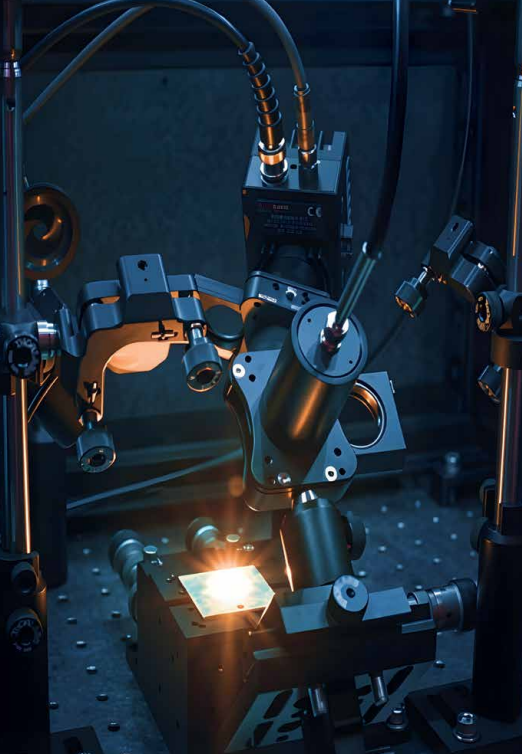
Image credit: TeraGlo
Company: TeraGlo (Adelaide, SA)
Quantum technology: Quantum sensing - Novel Fluorescence + quantum AI material sensing (QAIMS)
Industry partner: Australian Rare Earths Ltd
Research partner: University of Adelaide, Institute for Photonics and Advanced Sensing (IPAS)
Funding: $2.4M, Critical Technologies Challenge Program (Department of Industry, Science and Resources)
Application: Real-time, on-site detection and quantification of recoverable rare earth elements in clay deposits
End user / industry application: Mining & Critical Minerals - rare earth element (REE) exploration and processing, in partnership with Australian Rare Earths Ltd.
Australia sits on some of the world’s most strategically important rare earth deposits, the elements essential to electric vehicle motors, wind turbines, defence systems and quantum hardware itself. Yet the industry still relies on a workflow that hasn’t fundamentally changed in decades: take a sample, ship it to a laboratory, and wait days or weeks for an assay result.
For miners working clay-hosted rare earth element deposits, where grades vary sharply across short distances and recoverability hinges on subtle differences in mineralogy, the lag drives up costs, slows decisions, and means valuable material can be missed or low-grade waste sent through processing. Adelaide-based TeraGlo is changing this exploration equation and speeding up discovery.
A spin-out formed through collaboration between the Loughan Technology Group and the Adelaide University’s Institute for Photonics and Advanced Sensing (IPAS), the company has developed a Quantum AI Material Sensing platform, branded QAIMS, that delivers laboratory-grade material identification in real time, on site.
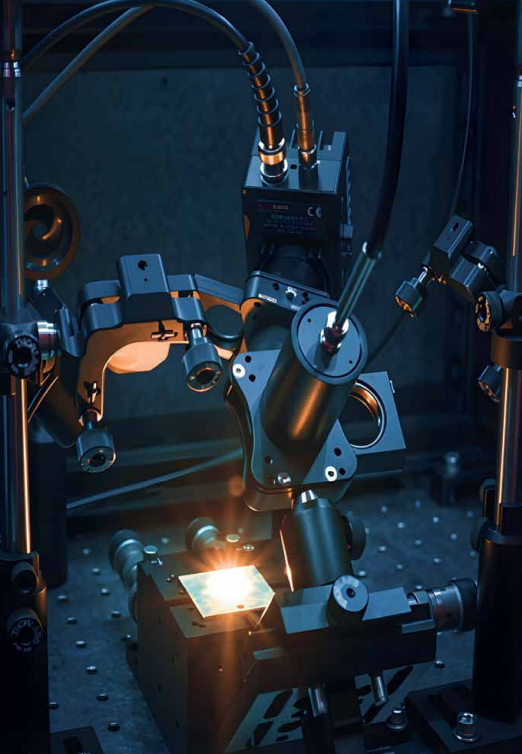
At the heart of the system is a technique called Novel Fluorescence (NF), in which multiple light sources at different wavelengths excite a sample and trigger characteristic colour signatures unique to each material. Combined with quantum-enhanced detection and onboard AI, the approach identifies not just what is in a sample, but also its morphology - its shape, size, structure, and phase - in a single, nondestructive scan.
Working with ASX-listed Australian Rare Earths Ltd, TeraGlo is now developing what is set to be the nation’s first real-time mine-site sensor capable of measuring recoverable rare earth elements directly in clay deposits.
The project recently secured $2.4 million in federal funding through the Department of Industry, Science and Resources’ Critical Technologies Challenge Program, part of a broader push under the National Quantum Strategy to translate Australia’s research strengths into commercial capability.
The TeraGlo team are configuring the QAIMS hardware in multiple form factors from handheld field scanners to over-belt conveyor systems, ore-sorting units and online slurry analysers, with secure cloud-based reporting so geologists and metallurgists can act on results within minutes rather than weeks.
The implications extend well beyond a single commodity. The same platform is being adapted for asbestos detection on construction sites, deep-sea polymetallic nodule analysis and, through a Defence Trailblazer-supported collaboration with IPAS, sovereign material sensing for lunar resource exploration and space applications. It is a vivid illustration of how quantum sensing is moving out of the physics lab and into rugged, real-world environments where decisions worth millions of dollars are made every day.
For Australia, the stakes are strategic as well as commercial. With global rare earth supply chains concentrated overseas and refining capacity in short supply, technologies that help domestic producers extract more value from the ore they already have are an increasingly important piece of the puzzle.
“For too long, the people making the most important decisions on a mine site have been the ones waiting longest
for answers. QAIMS changes that.
By bringing quantum sensing and AI together in a rugged, portable package, we’re giving operators the ability to understand exactly what’s in front of them - in real time, at the face.
Our work with Australian Rare Earths is proving that quantum technology isn’t a future promise for the resources sector; it’s delivering value today.”
Related Use Cases